






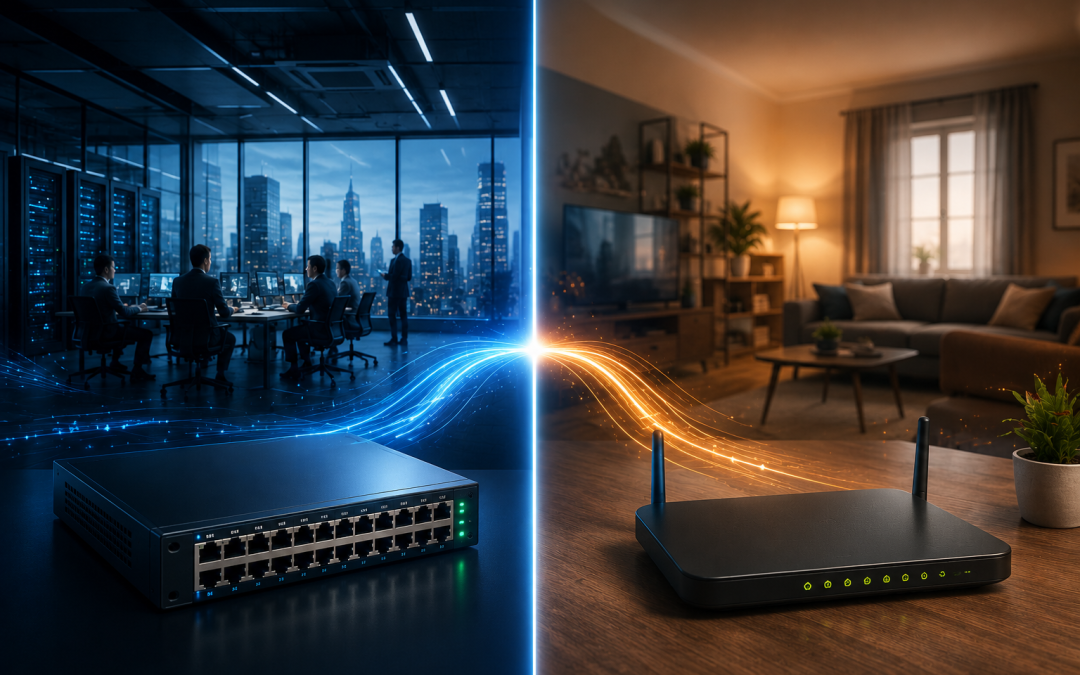
At first glance, business and residential internet might seem similar. They both get you online, after all. But when your operations depend on connectivity, the differences become clear very quickly.
Table of Contents
SLAs (Service Level Agreements)
One of the biggest differences is the presence of a Service Level Agreement. Business internet providers offer SLAs that define performance expectations, including uptime, speed, and response times.
Residential internet typically doesn’t come with these guarantees. If something goes wrong, you’re often left waiting without a clear resolution timeline.
Uptime Guarantees
For businesses, downtime is expensive. Business internet plans often include uptime guarantees of 99.9% or higher, backed by provider accountability.
Residential services don’t prioritize uptime the same way, making them a risky choice for companies that rely on constant connectivity.
Speed Consistency
With residential internet, speeds can fluctuate depending on neighborhood usage. During peak hours, you may experience slowdowns that affect performance.
Business internet is designed for consistency. You’re more likely to get symmetrical speeds (equal upload and download) and dedicated bandwidth that doesn’t dip when others are online.
Security Differences
Security is another major factor. Business internet solutions often include advanced security features like firewalls, network monitoring, and threat protection.
Residential connections typically lack these safeguards, leaving businesses more vulnerable to cyber threats. Choosing the right type of internet points back to reliability, security, and performance.
Upgrade to Business-Grade Internet
If your business depends on staying connected, it’s time for a better solution. Fuse.Cloud provides reliable, secure business internet designed to keep your operations running smoothly.
Reach out to Fuse.Cloud today and upgrade your connection with confidence.